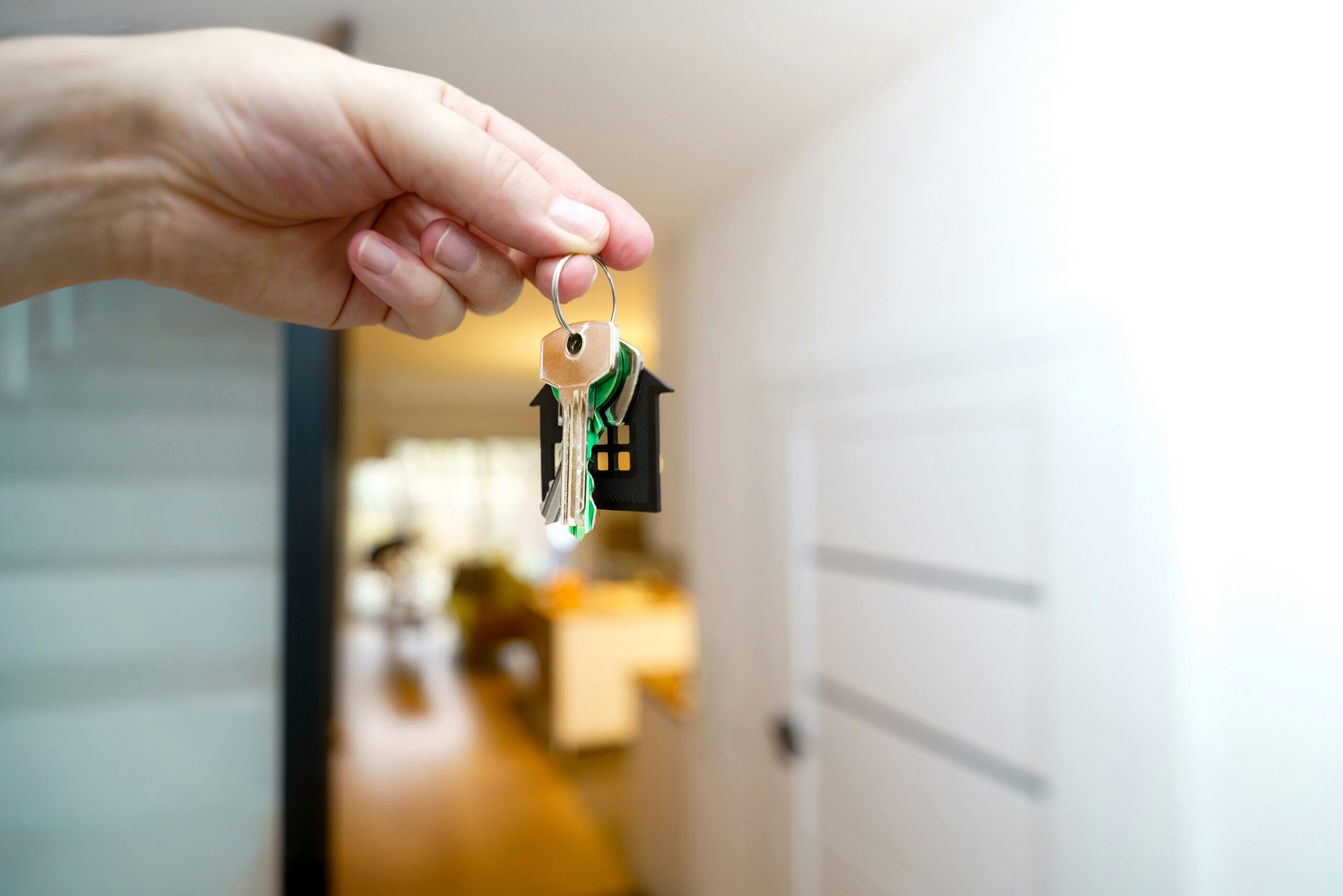
Every home tells a story. Some people have built theirs with their own hands, through dedication and sacrifice. There are those who have inherited it from their parents and cherish its sentimental value. And then there are those who have bought a home in their favourite place, hoping to spend many happy moments there. But life often throws a spanner in the works and forces you to move elsewhere.
And so that house ends up standing empty for most of the time, whilst continuing to incur considerable costs: taxes, utility bills and maintenance.
The good news is that that house can be brought back to life and turned into an opportunity. With the short-term lettings Your unused home can become a source of income, without the need to register for VAT.
In this article, we provide you with a comprehensive guide to Furnished Holiday Apartments (AAUT) and explain how much you can earn from non-commercial holiday lettings, as well as the steps you need to take to ensure your flat complies with the regulations and start letting it out.
What is an AAUT (Furnished Flat for Tourist Use)?
Un AAUT It is a furnished house or flat that the owner can let out for short stays of up to 30 consecutive nights.
Il D.L. 50/2017, art. 4, definisce infatti “locazioni brevi” solo gli affitti fino a 30 giorni. Oltre questa durata, il contratto va registrato all’Agenzia delle Entrate.
There is also talk of non-commercial holiday let, because the owner lets out the property as a private individual rather than as a business. This means no VAT registration, no registration with the Chamber of Commerce and a straightforward tax regime on the income.
What can you orOffer your guests:
- a furnished and fully equipped flat;
- Linen and end-of-stay cleaning.
What you cannot offer:
- breakfast or the serving of food and drink;
- daily cleaning and linen change;
- reception or other hotel services.
Why it is worth setting up a non-commercial holiday rental business
An unused or under-utilised property still incurs significant annual costs.
La non-commercial holiday let It is now one of the simplest and most effective ways to make the most of your home, which has been empty for far too long.
This is an activity that anyone can get involved in, as it does not require any specific qualifications, but simply careful management in line with current regulations.
If you choose to use your property for short-term lets, you will be able to:
- to cover fixed costs: Property tax, utility bills and maintenance;
- earn some extra money which may increase over time;
- run the business in a streamlined way: once you’ve brought your affairs into order, there are few obligations, and they’re always the same;
- use the property in a way that suits your needs: you can choose to lock the booking calendar at any time;
- to welcome guests all year round: More and more pensioners, digital nomads and foreign travellers are choosing to stay in Calabria even out of season.
And then there is an important benefit for the local area to consider, which goes beyond financial gain, because short-term lettings encourage seasonal tourism and more besides, with consequent benefits for local businesses as well.
Do you need a VAT number for short-term lettings?
It’s one of the questions owners ask us most often. In most cases, the answer is no.
Dal 1° gennaio 2026 puoi affittare per brevi periodi fino a 2 immobili come privato, without registering for VAT.
Infatti, se fino al 2025 era possibile destinare fino a tre appartamenti agli affitti brevi, la Legge di Bilancio 2026 (L. 199/2025) ha abbassato la soglia a due appartamenti. Questo significa che dal terzo immobile l’attività è considerata d’impresa, con obbligo di partita IVA.
How do you pay tax on short-term lettings?
You can apply the flat-rate tax, a flat-rate tax that replaces IRPEF:
- 21% on the first property (you choose which one);
- 26% on the second one.
Alternatively, you can opt for standard IRPEF taxation.
If a guest books via Airbnb or Booking.com, the platform withholds 21 per cent and pays it to the State. For the first property subject to the flat-rate tax scheme, therefore, the tax has already been paid.
If your local council requires it, you will also need to collect thetourist tax. To assess your specific situation, always consult your accountant.
How to bring your flat in Calabria up to standard
The administrative process involved in bringing your flat into compliance for short-term lettings may seem complicated, but with the right support, it will be straightforward to complete all the necessary steps.
Here are the main steps to follow:
- prepare the necessary documentation: certificate of occupancy for the property, land registry extract, the owner’s certified email address (PEC) and SPID;
- obtain the CIR and CIN identification codes: these are compulsory and must be included in every online advert;
- fit the flat with the required safety equipment: gas detector (not compulsory if the flat has an induction hob), carbon monoxide detector and fire extinguisher.
How much can you earn from short-term lettings?
The profit from short-term lettings is not fixed, as it depends on a number of factors:
- the type of accommodation: a studio flat, a two-room flat or a large house each have different potential;
- the number of beds: the more guests you can accommodate, the higher the rate can be;
- the position: is there more demand near the seaside or in the town centre;
- the period: in summer, prices can even double;
- the equipment: Air conditioning, Wi-Fi, a dishwasher or a balcony with a sea view are all features that have a significant impact on the price.
To give you a concrete idea: in Brancaleone and Palizzi (RC), during the low season (from October to May), an apartment can be rented between 200 and 500 euros a week. During the high season, rates may rise significantly.
The aim, rather than ‘making a fortune’, is to ensure that the property generates as much income as possible in a sensible way to cover expenses, meet running costs and create an additional income stream that grows over time.
AAUT or B&B: what’s the difference?
AAUTs and B&Bs are both types of accommodation that fall under the category of non-hotel accommodation, but in reality they differ greatly in terms of their nature, obligations and the level of commitment required.
TheAAUT It is a flat let as a whole, for stays of up to 30 days, with no additional services.
You can run it as a private individual, without a VAT number, for up to two properties, and it requires minimal effort: welcoming guests, checking them out and cleaning at the end of their stay.
It is the preferred choice for guests seeking privacy, greater independence and the freedom to set their own schedule.
Il B&B It is, on the other hand, a proper accommodation facility.
The manager lives in the same building and is required to provide breakfast for their guests, whilst also maintaining a constant commitment to guest care.
Running a B&B certainly involves more administrative and tax-related obligations and often requires you to register for VAT. In return, it offers the chance to have a more direct relationship with guests.
In short, the AAUT is the ideal choice for anyone wishing to generate income from a property in a simple and flexible way, whilst ensuring guests’ independence and freedom. A B&B, on the other hand, is the right choice for those who wish to make hospitality part of their daily routine, offering their guests services and personal attention.
Would you like to turn your unused home into a source of income? We’ll help you do just that
If you’re thinking of giving your property a new lease of life by using it for short-term lettings, but are put off by the red tape and deadlines, we at Short-Term Lettings Division We’re here to support you every step of the way, from getting everything in order to your first bookings.
We have developed a comprehensive service to support you with every aspect of non-commercial holiday lettings:
- bureaucratic process: obtaining CIR and CIN identification codes, and registering on the Alloggiati Web portal and the regional portal;
- activity setup: rates, organising check-in, check-out and cleaning, and preparing all the necessary equipment for running the business;
- professional photo shoot, to enhance the value of your flat;
- ad creation on Airbnb, Booking.com and Google Maps.
Contact us today to discuss how we can work together to turn your property into a new opportunity for income and growth.
FAQ
As an AAUT, can I let out a house I have inherited?
Yes, you can do so if you are the owner or the person with the right of usufruct, and if the property is fit for occupation and furnished.
How long does it take to bring the flat up to standard?
It depends on the response times of the relevant departments within the local council and the regional authority. Generally, barring any unforeseen circumstances, the procedure is completed within 14 days.
What happens if I post an advert without a CIN?
You risk a fine of between 500 and 5,000 euros and the removal of the advert from the platforms.
Do I need to draw up a contract with the guest?
No. For stays of up to 30 days, there is no obligation to register with the Revenue Agency.